By: Michael Clay
Before we dive in lets begin our conversation about the relationship between independent labels and pre-rock ‘n roll R&B with a bit of background information. Leading up to this era the music industry was dominated by major record labels who catered to the musical tastes of societies elites as they were the only people who could afford it. As a result, major record labels mainly produced musical styles and artists that were established and enjoyed by societies elites. This method had been very lucrative for the major labels so they felt no need to keep up with the continuously changing styles and elements of music especially in the case of R&B. This reality made it very difficult for early R&B music and artists at the time to gain any mainstream popularity or acceptance as their music wasn’t even being heard on the mainstream platform. This lead to the symbiotic relationship between R&B artists and independent record labels which was crucial to the success and development of R&B music and also very lucrative for indie record labels. R&B artists finally had the chance to have their music heard on the mainstream platform and independent record labels had unknowingly found the future of popular music which would allow them to take control of the music industry for years to come. The success and entrance of a so called black music into mainstream popularity was also an indication of a shift that was beginning to occur in society that would blur racial lines and lay the foundation for some very interesting music.
Major Labels are Stuck In Their Ways
Initially major record labels wouldn’t produce R&B music because it was out of their comfort zone and thought that its insistent rhythm, uncontrolled energy and suggestive content would make is unsuitable for mainstream consumption. During this era the major record labels had already aligned themselves with the most established black artists of the big band sound. As a result they didn’t feel the need to keep up with the continuously evolving African American music culture that would continue to heavily shape popular music. R&B music represented the working class black communities and their culture which wasn’t deemed suitable for the white and black elites that the major record labels were catering to at the time. This was during wartime when societies elites dominated the music industry purely based off their ability to afford it (Garafalo, Waksman, 2021). However, after WW2 ended and everybody returned home, African Americans were able to reintegrate back into the work force and in turn into the marketplace of popular music. This new market of African American consumers in the popular music landscape was aided by record companies who lowered the cost of access to music from previously expensive publishing houses.
A New Audience Finds It’s Voice
Leading up to this era the African American audience had been neglected by major record labels which lead the way to independent labels finally giving them a voice. According to (Townsend, 2011) in the beginning most indie labels were small regional operations that often sold records out of the trunks of cars. They also mainly sold records of genres that major record labels ignored like rockabilly and R&B. One major advantage that independent labels had over major record labels was low overhead costs which gave them independence and freedom of movement. In addition, their offices were usually located in poorer neighbourhoods which was often where the talent was. This also helped them build relationships in the black community which was key to their survival and success.
(Source: “Wikipedia”)
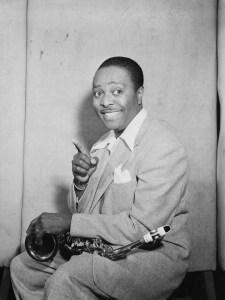
If there was one man who signified the change in popular music from controlled big bands to the emotion and passion of R&B; it was Louis Jordan. Jordan signed to Decca in 1939, where he and his band The Tympani Five began producing music with new instrumentation. With a much smaller horn section, the rhythm in his music became much more pronounced. Their music was infused with Jordans own blend of jazz, boogie woogie and blues with amusing lyrics and comedic stylings which gained enormous popularity. Jordan also made excellent use of promotional “soundies” which (Goldmine staff, 2011) explains is the equivalent of an early version of the music video which only enhanced Jordan’s popularity even further. Jordan’s groundbreaking success that turned the music world upside down also earned him the name “The King of the Jukebox” (Zeiler, 2022). Jordan’s biggest contribution to popular music was the shuffle boogie beat that he used. This is one of the elements that followed R&B all the way into Rock ‘n Roll. Jordan’s shuffle boogie beat is best evident in his song “Choo Choo Ch’boogie” which quickly hit the million sales plateau and was the number one song on the charts for 18 weeks.
(Source: “King Records”)
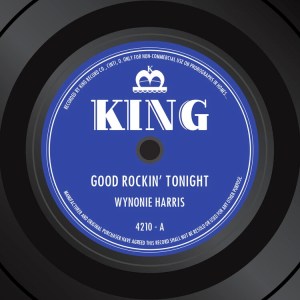
A major component that set apart the most successful independent labels of the time were the creative and stylistic choices that they took and King Records was no exception to this. Established in Cincinnati by Sydney Nathan in 1945; King Records is remembered for its ability to produce Country and R&B music with equal success and have artists crossover into different genres. The success of King Records was largely due to the cities diverse music culture which Nathan brought together when he started encouraging his black and white artists to record each other’s material. It was proposed by (Garafalo, Waksman, 2021) that King records equally strong rosters of R&B and Country singers made it possible for these crossovers into different genres to occur as no other labels were able to do so as successfully. A big part in the companies success in these crossovers was producer Donald Glover who recorded both R&B and Country songs and produced many of King Records R&B hits. These crossovers into different genres are just one example of how independent labels took very creative approaches to producing music. It was creative decisions like these that came to define R&B music of the time and helped develop it into what it is today.

(Source: “The Vinyl Factory”)
Another example of a successful partnership between a white businessman and a black producer came in the form of Chess Records. In 1950, Chess Records was opened by brothers Leonard and Phil Chess in Chicago after they bought Aristocrat Records in 1947 and later changed the name to Chess in 1950. From their rough beginnings as a tiny operation, Chess Records became one of the most important Rock ‘n Roll labels in the country. One key to their success was Willie Dixon who had been associated with the label as a singer, composer, talent scout and producer since its early beginnings as Aristocrat. Approximately 200 songs were written by Dixon during his time at Chess Records including many hits like “Im Ready” and “My Babe”. He also contributed to any number of hits recorded by Chess artists including Howlin Wolf and Muddy Waters. Although Chess Records has an impressive history they are an example of how black artists were taken advantage of by record labels during this era. (Kepa, 2016) says that while trying to turn a profit in a competitive market the Chess brothers would often buy their artists gifts and pay their bills instead of paying them royalties. This eventually landed Chess Records in numerous legal issues with its artists. Although this occurred, it is undisputed that the brothers formed meaningful relationships with their artists not just as business associates, but as friends.
(Source: “Wikipedia”)
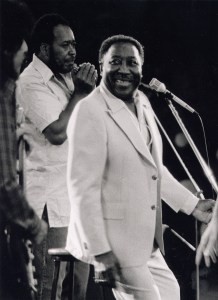
If there was one man who symbolized the energy and passion of R&B, it was Muddy Waters. The Mississippi Delta native formally known as Mckinley Morganfield was a master of the slide guitar when he was first recorded in 1941. After gaining confidence in his musical abilities he moved to Chicago two years later where he started adapting the sound and style of the rural delta blues. In the following years Waters and his band’s music had become increasingly popular in the delta regions of the US. However, it wasn’t until 1958 when the group brought their electric blues sound to England, that Waters became an international star (Biography.com Editors, 2014). Water’s and his band were the first important electric band which used amplification to make their music more ferocious and physical instead of just simply louder. This was Waters biggest contribution to popular music as most of the next generation of Chicago blues musicians would move through his band. Most importantly this sound would later become a staple of the Rock ‘n Roll genre. The staple of Waters sound can be best heard in hits like “I feel like going home” and “I can’t be satisfied”.
(Source: “78rpm.club”)
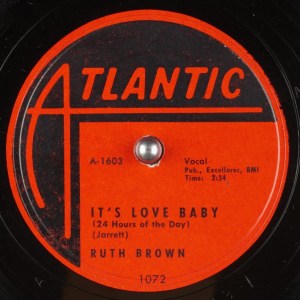
Perhaps the most important new independent label was Atlantic Records which was founded by Ahmet Ertegun in 1947. In 1953, Jerry Wexler, a reviewer for Billboard said to have coined the term rhythm and blues became head of artist and repertoire. Later in 1956, Ergetuns brother Nesuhi created what would become a distinguished jazz division. The Ergetun brothers were avid jazz and blues collectors and had a huge love for music in general. This perhaps gave them an advantage over other independent labels who entered the business solely as a commercial opportunity as they were able to attract outstanding talent. This included artists like Ray Charles, the Drifters and most notably Ruth Brown who was one of their first signings. Brown, formally known as Ruth Weston turned out 11 top 10 R&B hits and was the best selling female black artist of the early 1950s. Her success allowed Atlantic Records to skyrocket and for a time Atlantic Records became known as “the house that Ruth built”. Brown was a glamorous singer and became a tireless advocate for musicians’ rights later on in life (Pareles, 2006). She is also remembered for bringing pop music styles into R&B. One of her greatest hits was “Teardrops From My Eyes” which was the #1 R&B hit for seven straight weeks.
Pre-Rock ‘n Roll R&B At It’s Beginnings
At its beginning the intended audience of pre-rock ‘n roll R&B was mainly African Americans. The distribution of music became a very easy task with the invention of new technologies like the transistor which made the first ever truly portable radio possible. Other inventions like the 45 rpm record and later the LP allowed for more affordable music production and distribution. This allowed all races and classes of society an opportunity to impose their tastes on popular music which was previously dominated by societies elites. It also allowed independent labels the chance to challenge the major record companies that monopolized the music industry up until this point. It was also during this time that record companies would come to replace publishing houses as the means of music distribution.

The Rise of Independent DJ’s and Teenagers
Affordable music and portable radio’s also opened up the door to a new group of consumers who would soon come to impose their taste on popular music which was teenagers. Teenagers were now able to listen to music where they wanted, when they wanted and most importantly what music they wanted to listen to. In the late 1940’s, the rise of television and suppression of FM/AM broadcasting lead to the emergence of independent radio or more specifically independent DJ’s. Because of their eccentric personalities and energetic personas independent deejays became very popular especially among teenagers. Record companies began supplying independent deejays with records hoping they could turn them into hits. This became known as Payola which was how independent labels were able to get their music on the radio during times with increasing competition. Independent DJ’s of the time experimented with all kinds of music but found the most successful to be R&B. One of the most influential and successful independent DJ’s of the time was Alan Freed who was initially hesitant towards R&B music. Not long after, he switched to R&B music and later played a massive role in popularizing Rock n’ Roll. By 1952, it was reported by independent DJ’s in LA that the R&B music business was now 40% white (Garafalo,Waksman, 2021). This represented a change in popular music tastes but also blurred the racial lines in society as now more black and white people were enjoying the same music. It also meant that the segregated society of before was no longer an option for the direction popular music was heading.
The End of R&B’s Reign On Popular Music
Throughout the rise and development of pre-rock ‘n roll R&B, independent labels and R&B artists made very interesting and creative decisions regarding the style, themes and instruments used in their music. They brought forward R&B music with themes of sexuality, ferociousness and electricity that was unheard of at the time which would come to lay the foundation for Rock ‘n Roll to follow. They also introduced new recording and producing techniques with new arrangements of instruments that produced a sound that would come to dominate the music industry for years to come. As a result, independent labels had control of pre-rock ‘n roll R&B until the late 1940s and early 1950s. This shifted as R&B music morphed into what is know known as Rock ‘n Roll. It was also at this time that major record labels saw the direction popular music was heading and weary of their previous mistakes started buying up all the Rock ‘n Roll talent they could find. Overall, pre-rock ‘n roll R&B is remembered for its unique style, creativity and for its significant and continuous impact on popular music.
Bibliography
Biography.com Editors. “The Biography.com website: Muddy Waters Biography.” Accessed Oct. 10. 2022. https://www.biography.com/musician/muddy-waters
Garafalo, ReeBee and Waksman, Steven. “Rockin’ Out: Popular Music in the U.S.A.” Accessed Oct. 01. 2022. https://revel-ise.pearson.com/courses/62ffd90f093a8566d41c3810/dashboard
Goldmine staff. “Goldmine The Music Collector’s Magazine: 1940s musicians laid the cornerstone for rock ‘n’ roll.” Accessed Oct. 07. 2022. https://www.goldminemag.com/articles/1940s-musicians-laid-the-cornerstone-for-rock-n-roll
Kepa, Marek. “Chess Records: How Two Polish Brothers Made Music History.” Accessed Oct. 08. 2022. https://culture.pl/en/article/chess-records-how-two-polish-brothers-made-music-history
Townsend, David. “The History of Rock ‘n’ Roll: The Independent Record Labels.” Accessed Oct. 02. 2022. https://www.history-of-rock.com/non_frames.htm
Parales, Jon. “The New York Times: Ruth Brown, 78, a Queen of R&B, Dies.” Accessed Oct. 07. 2022. https://www.nytimes.com/2006/11/18/arts/music/18brown.html
Zeiler, Millie. “Classic Rock History.com: Top 10 Louis Jordan Songs.” Accessed Oct. 02. 2022. https://www.classicrockhistory.com/top-10-louis-jordan-songs/
 Site Title